/ USD
/ USD
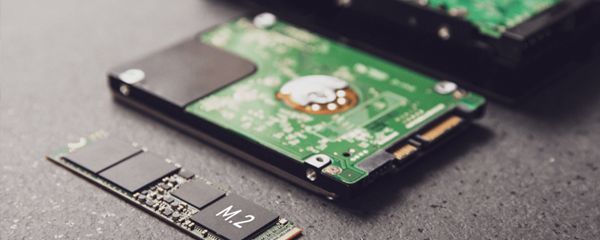
If wondering whether to put SSD or NVMe in AI server – answer is: depends on what you really do on disk. Not on GPU model, not on server price, only on whether your workloads actually "choke" storage. Because in many AI projects disk is background. In others – becomes bottleneck killing entire environment performance.
And here comes mistake repeating very often: buying NVMe "because AI" instead checking whether you'll actually use its capabilities.
When RAID on SSD really suffices in AI server – and where doesn't make sense overpaying for NVMe?
In most AI projects SSD comfortably handles everything – and this fact surprises many people. If doing inference, model testing, working on smaller batches or simply not crunching data non-stop, RAID 10 on SATA/SAS SSD gives more than sufficient performance.
Concretely: configuration like 4× 1 TB SSD in RAID 10 gives:
- 100-200k IOPS,
- roughly 800-1000 MB/s throughput.
and suffices for:
- local LLM models,
- API inference,
- test environments,
- even some production workloads.
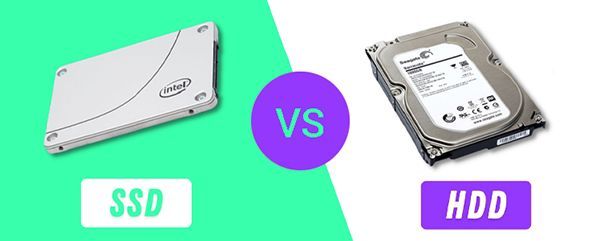
Important – SSDs are several times cheaper than NVMe yet still offer 10-20× better performance than old HDD.
And now key point: if your project doesn't generate huge number of disk operations, NVMe won't speed it noticeably. GPU and RAM will matter more.
Many people burn budget here. Storage looks "powerful" but really sits idle.
In what scenarios does NVMe stop being option and become necessity?
There are situations where SSD stops sufficing – and you see it immediately. When starting to train larger models or work on big datasets, storage suddenly stops being addition and becomes key pipeline element.
Typical cases:
- training LLM (7B-13B and up) – continuous reading hundreds GB data,
- OLTP databases and real-time analytics – huge number small operations,
- rendering, VDI, large user environments.
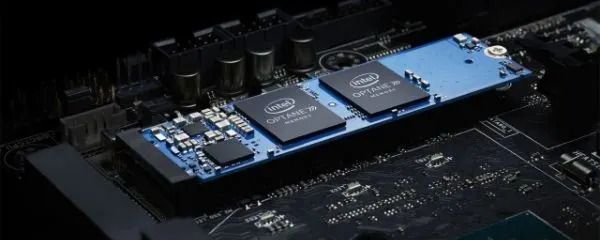
In such scenarios NVMe makes difference:
- 4-8× higher throughput,
- 5-10× more IOPS,
- significantly lower latency (microsecond range).
Configuration like:
- 4× NVMe PCIe 4.0 in RAID 10
gives:
- 500k+ IOPS,
- 5 GB/s and more,
needed so GPU doesn't wait for data.
And here we reach essence: if GPU waits for disk – you lose money. Because you have expensive hardware not being utilized.
How much IOPS and throughput does your AI project really need – and how to check?
Simplest rule: if don't know how much IOPS you have – likely don't need NVMe. Sounds brutal but in many cases that's exactly it.
Boundaries fairly clear:
- up to ~200k IOPS and <1 GB/s → SSD suffices,
- above 200k IOPS and >2 GB/s → NVMe starts making sense.
Only numbers one thing, reality another. Better look at symptoms:
- model loads long despite fast GPU,
- batch processing "stalls" when reading data,
- database has delays under heavy traffic.
These are moments when storage starts limiting.
Also worth remembering not all workloads equal:
- inference → few IOPS, more predictable,
- training → many IOPS, random data access,
- backup → almost no performance requirements.
So no single "good" choice. Only matching to specific case.
Worth combining SSD and NVMe in one server – what sensible mixed configuration look like?
Yes – and this is most sensible approach in many AI environments. Instead choosing one or other, you divide roles.
Typical layout working well:
- NVMe (RAID 10) → training data, models, active workloads,
- SSD (RAID 10 or RAID 5/6) → system, backup, archive.
This way:
- you have performance where needed,
- don't overpay for storage not needing speed,
- easier to scale environment.
This approach visible in servers like:
where can mix different disk types and control what goes where.
And this is moment when storage stops being "one choice" and becomes part of architecture.
FAQ
Is NVMe always better than SSD?
Yes – if looking at performance. But doesn't always make economic sense if workload doesn't use it.
Does SSD suffice for AI?
In many cases yes – especially for inference, testing and smaller models.
When is NVMe necessary?
When training models, large databases and high-IOPS workloads.
RAID 10 or RAID 5/6 with SSD and NVMe?
RAID 10 gives better performance and preferred for AI. RAID 5/6 more for capacity and backup.
Does mixing SSD and NVMe make sense?
Yes – usually best compromise between cost and performance.
Will NVMe speed up every AI project?
No. If bottleneck in GPU or RAM, you might not notice difference.
What setup to start with?
If uncertain – RAID 10 on SSD as base and possible NVMe expansion for specific workloads.