/ USD
/ USD
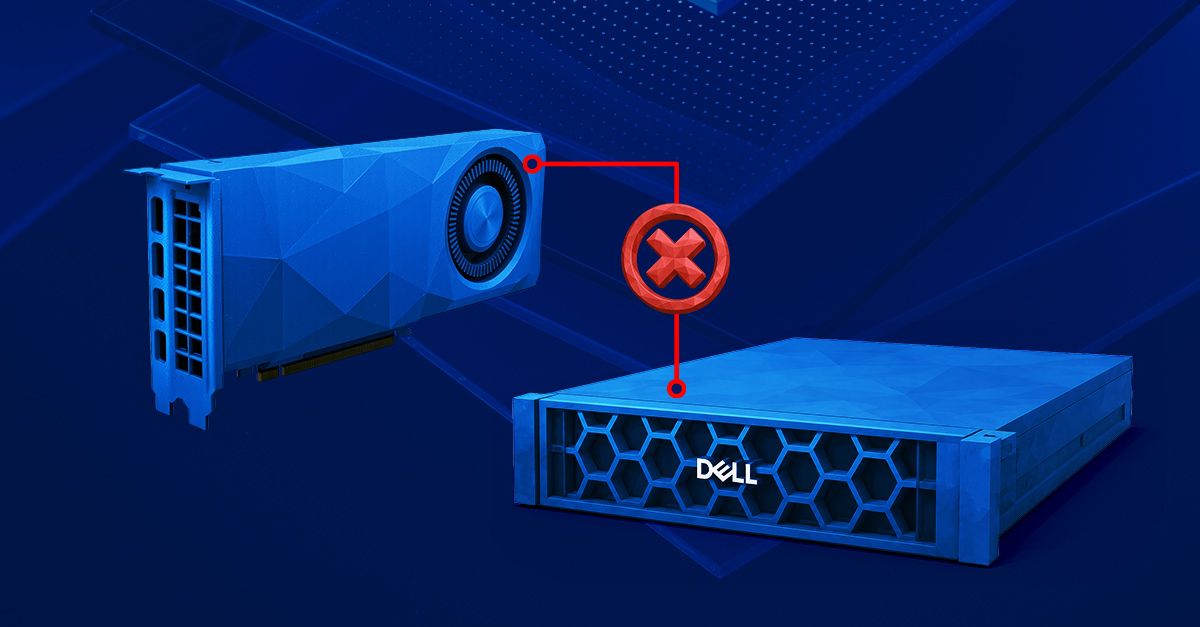
Building an in-house environment for training AI models and Machine Learning is a natural step toward technological independence for many companies. When designing such infrastructure, there is often a temptation to optimize costs by combining the latest GPU accelerators with proven, previous-generation servers. But is this always a safe solution? Our engineers put the popular Dell PowerEdge R750 server and the latest NVIDIA RTX PRO 6000 Blackwell Max-Q card to the test. The results were quite surprising.
Theory: Paper Compatibility and Safe Power Margins
The Dell 15th Generation server platform, with its flagship representative, the PowerEdge R750, is an extremely popular and efficient piece of hardware that still performs excellently in many data center environments. On the other hand, the new NVIDIA RTX PRO 6000 Blackwell Max-Q card, equipped with a massive 96 GB vRAM buffer, is currently one of the most sought-after accelerators for working with Large Language Models (LLM) and advanced AI.
Looking at the specifications, combining these two devices seems logical and perfectly safe. The TDP for the RTX PRO 6000 Max-Q version is a maximum of 300W. According to official Dell documentation (and many offers available online that pair the R750 with, for example, the older Ada generation), this server should easily handle such power requirements using the official Dell 12VHPWR cable.
To ensure absolutely optimal power conditions for the system, Hardware Direct technicians prepared two configuration variants:
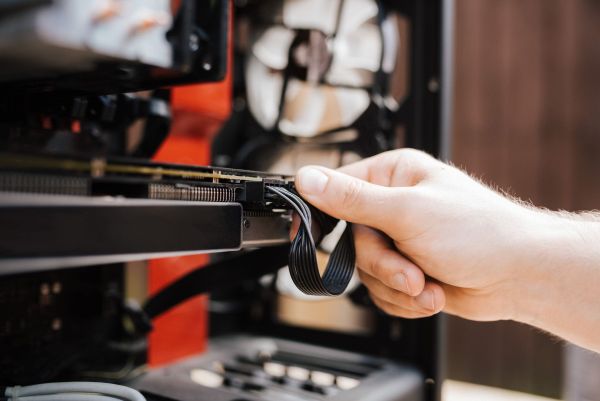
- Connection via the official R750 <-> 12VHPWR power cable.
- A configuration with a massive power reserve: utilizing power from 3 ports on the riser (each providing 225W), linked in a 3x 8-pin <-> 12VHPWR adapter configuration.
This theoretically provided a 375W power margin on the auxiliary power side alone.
Practice: Environmental Instability Under Load
Despite a "textbook" preparation of the platform, reality in the lab challenged the theoretical assumptions. In the R750 test environment, the RTX PRO 6000 Blackwell Max-Q behaved instability in both configurations during various types of synthetic and training loads.
In systems dedicated to long-term AI computations, any lack of stability disqualifies the machine from production use. Our engineers therefore proceeded with a deeper analysis of the problem.
Is PCIe 4.0 to Blame? Busting the Myth
The first "suspect" in such situations is often the generation of the PCI Express interface. The R750 server features PCIe Gen4 slots, while the latest cards are already fully adapted for Gen5 bandwidth.
However, our tests ruled out this scenario. Limitations resulting from PCIe 4.0 do not have a decisive impact on stability in this case. It is important to remember that the RTX PRO 6000 has a massive local data buffer in the form of 96 GB vRAM. In practice, this means that in most training scenarios, the GPU has the most necessary data at hand, and the difference in throughput between PCIe 4.0 and 5.0 is marginal and certainly does not cause the system to "crash."
The Real Cause: Transient Spikes and Power Engineering
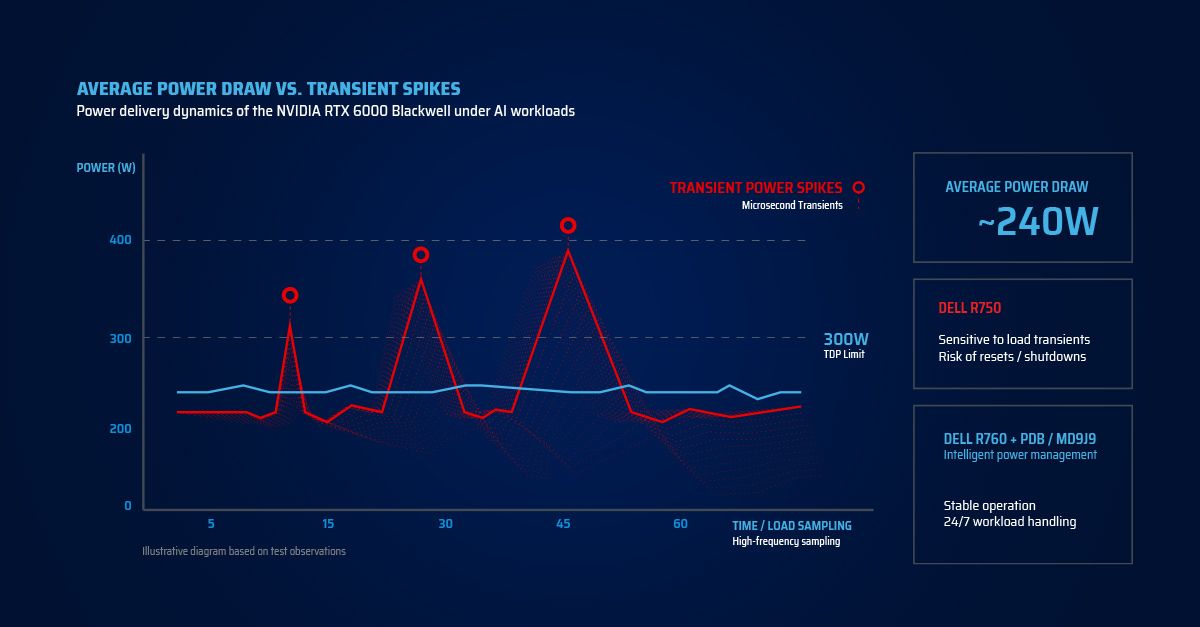
The key to solving the mystery lies in the operating characteristics of modern GPU units, including the Blackwell architecture. While the steady power consumption stays within the declared 300W, working with AI models generates extremely dynamic, microsecond surges in power demand, known as transient spikes.
These rapid load changes turned out to be an impassable barrier. The power engineering in 15th-generation platforms (even with high total PSU wattage and appropriate cabling) is not physically adapted to react so quickly and dynamically to voltage micro-spikes. The motherboard and power distribution system in the R750 simply cannot keep up with the workload characteristics of the latest AI accelerators.
The Hardware Direct Solution: Moving to the R760 Platform
To prove our thesis and find the optimal environment for the RTX 6000 Blackwell card, we moved the tests to the Dell PowerEdge R760 (Dell's 16th generation of servers).
This device features a completely redesigned power architecture, specifically engineered with modern AI accelerators in mind. Key differences we introduced in this test:
- Power cables run directly from the PDB (Power Distribution Board) of the power supplies, bypassing the bottlenecks of older designs.
We used a dedicated MD9J9 power cable. - This cable features an additional signal wire that plugs directly into the server's motherboard, providing intelligent communication between the PSU and the GPU.
- The result? The card performs flawlessly. No stability issues whatsoever. In both benchmarks and during very high, long-term training loads, the configuration on the R760 platform operated with full performance and, most importantly, without failure.
Summary and Takeaways for IT Architects
A very important lesson emerges from our tests: in the era of Artificial Intelligence and Blackwell-type architectures, raw data from spec sheets and the principle of "backward compatibility" are not enough to guarantee infrastructure stability.
The theoretically ideal and sufficiently powerful Dell R750 server could not handle the voltage micro-spikes generated by the new card. Only the new power engineering applied in the R760 allowed the accelerator's full potential to be unleashed.
Are you planning to build or expand infrastructure for Machine Learning or AI? Do not leave the stability of your hardware to chance. At Hardware Direct, we rely on hard data from our laboratory. Contact our team – we will advise you and provide equipment that has been verified by us and is 100% ready for the challenges of modern computing.