 / USD
/ USD
Server Configurators


- Server Dell PowerEdge R6615 16xE3.S NVMe with 1x EPYC 9124, 32GB RAM, BOSS-N1 with 2x Dell 480GB SSD NVMe M.2, 2x PSU 1400W, rails, iDRAC9 Enterprise1x Dell PowerEdge R6615 16xE3.S server platform 1x AMD EPYC 9124 processor 16-core 3GHz 64MB 200W 2x 16GB DDR5 RDIMM 4800MHz RAM 2x Hard drive Dell 480GB SSD N...Calculating delivery time...Warranty 36 months$11,957.91 $9,721.88
- Server Dell PowerEdge R6615 16xE3.S NVMe with 1x EPYC 9334, 32GB RAM, BOSS-N1 with 2x Dell 480GB SSD NVMe M.2, 2x PSU 1400W, rails, iDRAC9 Enterprise1x Dell PowerEdge R6615 16xE3.S server platform 1x AMD EPYC 9334 processor 32-core 2.7GHz 128MB 210W 2x 16GB DDR5 RDIMM 4800MHz RAM 2x Hard drive Dell 480GB SS...Calculating delivery time...Warranty 36 months$13,547.11 $11,013.91
- Server Dell PowerEdge R6615 16xE3.S NVMe with 1x EPYC 9354, 32GB RAM, BOSS-N1 with 2x Dell 480GB SSD NVMe M.2, 2x PSU 1400W, rails, iDRAC9 Enterprise1x Dell PowerEdge R6615 16xE3.S server platform 1x AMD EPYC 9354 processor 32-core 3.25GHz 256MB 280W 2x 16GB DDR5 RDIMM 4800MHz RAM 2x Hard drive Dell 480GB S...Calculating delivery time...Warranty 36 months$13,656.71 $11,103.02
- Server Dell PowerEdge R6615 16xE3.S NVMe with 1x EPYC 9454P, 32GB RAM, BOSS-N1 with 2x Dell 480GB SSD NVMe M.2, 2x PSU 1400W, rails, iDRAC9 Enterprise1x Dell PowerEdge R6615 16xE3.S server platform 1x AMD EPYC 9454P processor 48-core 2.75GHz 256MB 290W 2x 16GB DDR5 RDIMM 4800MHz RAM 2x Hard drive Dell 480GB ...Calculating delivery time...In stock 5Warranty 36 months$13,985.51 $11,370.33
- Server Dell PowerEdge R6615 10x2.5" (4xNVMe) with 1x EPYC 9124, 64GB RAM, H965i, BOSS-N1 with 2x 480GB SSD NVMe M.2, 2x 6.4TB SSD NVMe U.3 2.5", 2x10/25GbE SFP28, 2x PSU 1400W, rails, bezel, iDRAC9 Enterprise1x Dell PowerEdge R6615 10x2.5" server platform 1x AMD EPYC 9124 processor 16-core 3GHz 64MB 200W 2x 32GB 4800MHz DDR5 RDIMM RAM 2x SSD 6.4TB NVMe PCIe U.2 dri...Calculating delivery time...In stock 3Warranty 36 months$14,604.70 $11,873.74
- Server Dell PowerEdge R6615 10x2.5" (4xNVMe) with 1x EPYC 9354P, 64GB RAM, H965i, BOSS-N1 with 2x 480GB SSD NVMe M.2, 1x 480GB SSD SATA 2.5", 2x 1.92TB SSD NVMe U.2 2.5", 2x10/25GbE SFP28, 2x1GbE, 2x PSU 700W, rails, bezel, iDRAC9 Enterprise1x Dell PowerEdge R6615 10x2.5" server platform 1x AMD EPYC 9354P processor 32-core 3.25GHz 256MB 280W 4x 16GB DDR5 RDIMM 4800MHz RAM 1x SSD 480GB SATA 6G RI 2...Calculating delivery time...In stock 4Warranty 36 months$15,071.25 $12,253.05
- Server Dell PowerEdge R6615 16xE3.S NVMe with 1x EPYC 9534, 32GB RAM, BOSS-N1 with 2x Dell 480GB SSD NVMe M.2, 2x PSU 1400W, rails, iDRAC9 Enterprise1x Dell PowerEdge R6615 16xE3.S server platform 1x AMD EPYC 9534 processor 64-core 2.45GHz 256MB 280W 2x 16GB DDR5 RDIMM 4800MHz RAM 2x Hard drive Dell 480GB S...Calculating delivery time...Warranty 36 months$15,108.91 $12,283.67
- Server Dell PowerEdge R6615 16xE3.S NVMe with 1x EPYC 9124, 32GB RAM, H755N, BOSS-N1 with 2x Dell 480GB SSD NVMe M.2, 4x 3.84TB NVMe E3.S, 2x10/25GbE SFP28, 2x PSU 1400W, rails, iDRAC9 Enterprise1x Dell PowerEdge R6615 16xE3.S server platform 1x AMD EPYC 9124 processor 16-core 3GHz 64MB 200W 2x 16GB DDR5 RDIMM 4800MHz RAM 2x Hard drive Dell 480GB SSD N...Calculating delivery time...In stock 5Warranty 36 months$17,972.34 $14,611.66
- Server Dell PowerEdge R6615 16xE3.S NVMe with 1x EPYC 9124, 64GB RAM, H755N, BOSS-N1 with 2x Dell 480GB SSD NVMe M.2, 4x 3.84TB NVMe E3.S, 2x10/25GbE SFP28, 2x PSU 1400W, rails, iDRAC9 Enterprise1x Dell PowerEdge R6615 16xE3.S server platform 1x AMD EPYC 9124 processor 16-core 3GHz 64MB 200W 4x 16GB DDR5 RDIMM 4800MHz RAM 2x Hard drive Dell 480GB SSD N...Calculating delivery time...In stock 5Warranty 36 months$19,302.50 $15,693.09
- Server Dell PowerEdge R6615 16xE3.S NVMe with 1x EPYC 9334, 32GB RAM, H755N, BOSS-N1 with 2x Dell 480GB SSD NVMe M.2, 4x 3.84TB NVMe E3.S, 2x10/25GbE SFP28, 2x PSU 1400W, rails, iDRAC9 Enterprise1x Dell PowerEdge R6615 16xE3.S server platform 1x AMD EPYC 9334 processor 32-core 2.7GHz 128MB 210W 2x 16GB DDR5 RDIMM 4800MHz RAM 2x Hard drive Dell 480GB SS...Calculating delivery time...In stock 5Warranty 36 months$19,561.55 $15,903.70
- Server Dell PowerEdge R6615 16xE3.S NVMe with 1x EPYC 9354, 32GB RAM, H755N, BOSS-N1 with 2x Dell 480GB SSD NVMe M.2, 4x 3.84TB NVMe E3.S, 2x10/25GbE SFP28, 2x PSU 1400W, rails, iDRAC9 Enterprise1x Dell PowerEdge R6615 16xE3.S server platform 1x AMD EPYC 9354 processor 32-core 3.25GHz 256MB 280W 2x 16GB DDR5 RDIMM 4800MHz RAM 2x Hard drive Dell 480GB S...Calculating delivery time...Warranty 36 months$19,671.14 $15,992.80
- Server Dell PowerEdge R6615 16xE3.S NVMe with 1x EPYC 9454P, 32GB RAM, H755N, BOSS-N1 with 2x Dell 480GB SSD NVMe M.2, 4x 3.84TB NVMe E3.S, 2x10/25GbE SFP28, 2x PSU 1400W, rails, iDRAC9 Enterprise1x Dell PowerEdge R6615 16xE3.S server platform 1x AMD EPYC 9454P processor 48-core 2.75GHz 256MB 290W 2x 16GB DDR5 RDIMM 4800MHz RAM 4x Hard drive 3.84TB PCIe...Calculating delivery time...Warranty 36 months$19,999.95 $16,260.12
- Server Dell PowerEdge R6615 16xE3.S NVMe with 1x EPYC 9354, 64GB RAM, H755N, BOSS-N1 with 2x Dell 480GB SSD NVMe M.2, 4x 3.84TB NVMe E3.S, 2x10/25GbE SFP28, 2x PSU 1400W, rails, iDRAC9 Enterprise1x Dell PowerEdge R6615 16xE3.S server platform 1x AMD EPYC 9354 processor 32-core 3.25GHz 256MB 280W 4x 16GB DDR5 RDIMM 4800MHz RAM 2x Hard drive Dell 480GB S...Calculating delivery time...Warranty 36 months$21,001.29 $17,074.22
- Server Dell PowerEdge R6615 16xE3.S NVMe with 1x EPYC 9534, 32GB RAM, H755N, BOSS-N1 with 2x Dell 480GB SSD NVMe M.2, 4x 3.84TB NVMe E3.S, 2x10/25GbE SFP28, 2x PSU 1400W, rails, iDRAC9 Enterprise1x Dell PowerEdge R6615 16xE3.S server platform 1x AMD EPYC 9534 processor 64-core 2.45GHz 256MB 280W 2x 16GB DDR5 RDIMM 4800MHz RAM 2x Hard drive Dell 480GB S...Calculating delivery time...Warranty 36 months$21,123.34 $17,173.45
- Server Dell PowerEdge R6615 16xE3.S NVMe with 1x EPYC 9454P, 64GB RAM, H755N, BOSS-N1 with 2x Dell 480GB SSD NVMe M.2, 4x 3.84TB NVMe E3.S, 2x10/25GbE SFP28, 2x PSU 1400W, rails, iDRAC9 Enterprise1x Dell PowerEdge R6615 16xE3.S server platform 1x AMD EPYC 9454P processor 48-core 2.75GHz 256MB 290W 4x 16GB DDR5 RDIMM 4800MHz RAM 2x Hard drive Dell 480GB ...Calculating delivery time...In stock 5Warranty 36 months$21,330.09 $17,341.54
- Server Dell PowerEdge R6615 16xE3.S NVMe with 1x EPYC 9124, 128GB RAM, H755N, BOSS-N1 with 2x Dell 480GB SSD NVMe M.2, 4x 3.84TB NVMe E3.S, 2x10/25GbE SFP28, 2x PSU 1400W, rails, iDRAC9 Enterprise1x Dell PowerEdge R6615 16xE3.S server platform 1x AMD EPYC 9124 processor 16-core 3GHz 64MB 200W 4x 32GB 4800MHz DDR5 RDIMM RAM 2x Hard drive Dell 480GB SSD N...Calculating delivery time...In stock 5Warranty 36 months$21,557.96 $17,526.80
- Server Dell PowerEdge R6615 16xE3.S NVMe with 1x EPYC 9534, 64GB RAM, H755N, BOSS-N1 with 2x Dell 480GB SSD NVMe M.2, 4x 3.84TB NVMe E3.S, 2x10/25GbE SFP28, 2x PSU 1400W, rails, iDRAC9 Enterprise1x Dell PowerEdge R6615 16xE3.S server platform 1x AMD EPYC 9534 processor 64-core 2.45GHz 256MB 280W 4x 16GB DDR5 RDIMM 4800MHz RAM 2x Hard drive Dell 480GB S...Calculating delivery time...In stock 5Warranty 36 months$22,453.50 $18,254.88
- Server Dell PowerEdge R6615 16xE3.S NVMe with 1x EPYC 9334, 128GB RAM, H755N, BOSS-N1 with 2x Dell 480GB SSD NVMe M.2, 4x 3.84TB NVMe E3.S, 2x10/25GbE SFP28, 2x PSU 1400W, rails, iDRAC9 Enterprise1x Dell PowerEdge R6615 16xE3.S server platform 1x AMD EPYC 9334 processor 32-core 2.7GHz 128MB 210W 4x 32GB 4800MHz DDR5 RDIMM RAM 2x Hard drive Dell 480GB SS...Calculating delivery time...In stock 5Warranty 36 months$23,147.17 $18,818.84
- Server Dell PowerEdge R6615 16xE3.S NVMe with 1x EPYC 9354, 128GB RAM, H755N, BOSS-N1 with 2x Dell 480GB SSD NVMe M.2, 4x 3.84TB NVMe E3.S, 2x10/25GbE SFP28, 2x PSU 1400W, rails, iDRAC9 Enterprise1x Dell PowerEdge R6615 16xE3.S server platform 1x AMD EPYC 9354 processor 32-core 3.25GHz 256MB 280W 4x 32GB 4800MHz DDR5 RDIMM RAM 2x Hard drive Dell 480GB S...Calculating delivery time...In stock 5Warranty 36 months$23,256.77 $18,907.94
- Server Dell PowerEdge R6615 16xE3.S NVMe with 1x EPYC 9454P, 128GB RAM, H755N, BOSS-N1 with 2x Dell 480GB SSD NVMe M.2, 4x 3.84TB NVMe E3.S, 2x10/25GbE SFP28, 2x PSU 1400W, rails, iDRAC9 Enterprise1x Dell PowerEdge R6615 16xE3.S server platform 1x AMD EPYC 9454P processor 48-core 2.75GHz 256MB 290W 4x 32GB 4800MHz DDR5 RDIMM RAM 2x Hard drive Dell 480GB ...Calculating delivery time...In stock 5Warranty 36 months$23,585.57 $19,175.26
- Server Dell PowerEdge R6615 16xE3.S NVMe with 1x EPYC 9534, 128GB RAM, H755N, BOSS-N1 with 2x Dell 480GB SSD NVMe M.2, 4x 3.84TB NVMe E3.S, 2x10/25GbE SFP28, 2x PSU 1400W, rails, iDRAC9 Enterprise1x Dell PowerEdge R6615 16xE3.S server platform 1x AMD EPYC 9534 processor 64-core 2.45GHz 256MB 280W 4x 32GB 4800MHz DDR5 RDIMM RAM 2x Hard drive Dell 480GB S...Calculating delivery time...In stock 5Warranty 36 months$24,708.97 $20,088.59
- Server Dell PowerEdge R6615 16xE3.S NVMe with 1x EPYC 9124, 256GB RAM, H755N, BOSS-N1 with 2x Dell 480GB SSD NVMe M.2, 4x 3.84TB NVMe E3.S, 2x10/25GbE SFP28, 2x PSU 1400W, rails, iDRAC9 Enterprise1x Dell PowerEdge R6615 16xE3.S server platform 1x AMD EPYC 9124 processor 16-core 3GHz 64MB 200W 8x 32GB 4800MHz DDR5 RDIMM RAM 2x Hard drive Dell 480GB SSD N...Calculating delivery time...In stock 5Warranty 36 months$26,473.75 $21,523.37
- Server Dell PowerEdge R6615 16xE3.S NVMe with 1x EPYC 9334, 256GB RAM, H755N, BOSS-N1 with 2x Dell 480GB SSD NVMe M.2, 4x 3.84TB NVMe E3.S, 2x10/25GbE SFP28, 2x PSU 1400W, rails, iDRAC9 Enterprise1x Dell PowerEdge R6615 16xE3.S server platform 1x AMD EPYC 9334 processor 32-core 2.7GHz 128MB 210W 8x 32GB 4800MHz DDR5 RDIMM RAM 2x Hard drive Dell 480GB SS...Calculating delivery time...In stock 5Warranty 36 months$28,062.94 $22,815.40
- Server Dell PowerEdge R6615 16xE3.S NVMe with 1x EPYC 9354, 256GB RAM, H755N, BOSS-N1 with 2x Dell 480GB SSD NVMe M.2, 4x 3.84TB NVMe E3.S, 2x10/25GbE SFP28, 2x PSU 1400W, rails, iDRAC9 Enterprise1x Dell PowerEdge R6615 16xE3.S server platform 1x AMD EPYC 9354 processor 32-core 3.25GHz 256MB 280W 8x 32GB 4800MHz DDR5 RDIMM RAM 2x Hard drive Dell 480GB S...Calculating delivery time...In stock 5Warranty 36 months$28,172.55 $22,904.51
- Server Dell PowerEdge R6615 16xE3.S NVMe with 1x EPYC 9454P, 256GB RAM, H755N, BOSS-N1 with 2x Dell 480GB SSD NVMe M.2, 4x 3.84TB NVMe E3.S, 2x10/25GbE SFP28, 2x PSU 1400W, rails, iDRAC9 Enterprise1x Dell PowerEdge R6615 16xE3.S server platform 1x AMD EPYC 9454P processor 48-core 2.75GHz 256MB 290W 8x 32GB 4800MHz DDR5 RDIMM RAM 2x Hard drive Dell 480GB ...Calculating delivery time...In stock 5Warranty 36 months$28,501.34 $23,171.82
- Server Dell PowerEdge R6615 16xE3.S NVMe with 1x EPYC 9534, 256GB RAM, H755N, BOSS-N1 with 2x Dell 480GB SSD NVMe M.2, 4x 3.84TB NVMe E3.S, 2x10/25GbE SFP28, 2x PSU 1400W, rails, iDRAC9 Enterprise1x Dell PowerEdge R6615 16xE3.S server platform 1x AMD EPYC 9534 processor 64-core 2.45GHz 256MB 280W 8x 32GB 4800MHz DDR5 RDIMM RAM 2x Hard drive Dell 480GB S...Calculating delivery time...In stock 5Warranty 36 months$29,624.75 $24,085.16
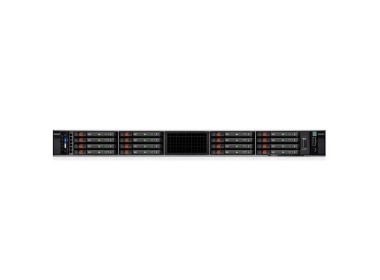
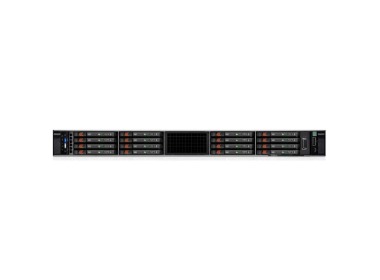
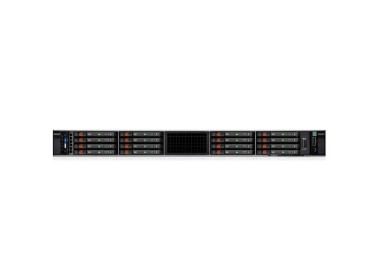
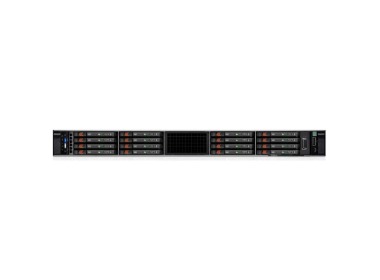
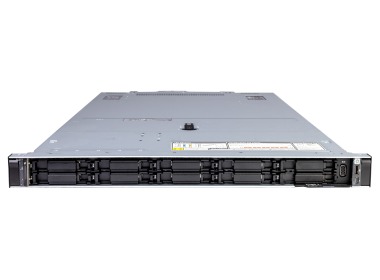
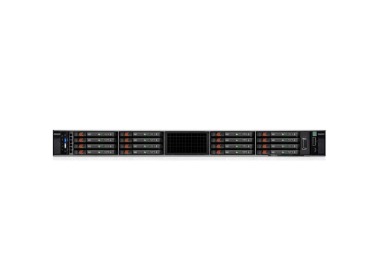
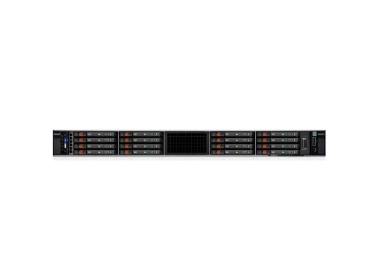
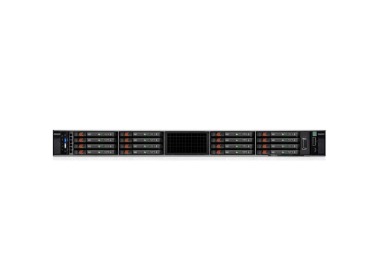
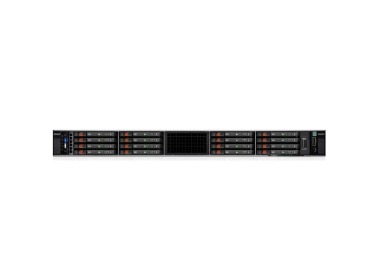
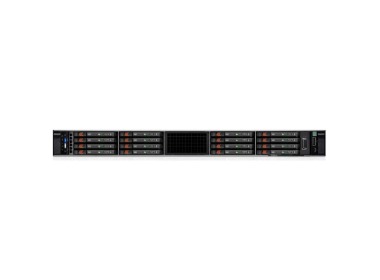
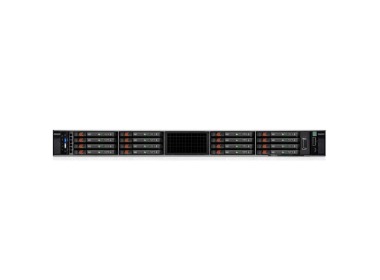
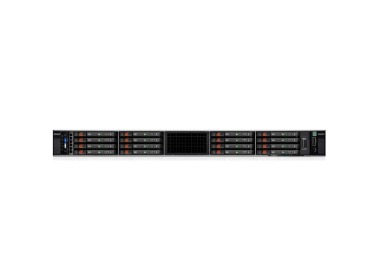
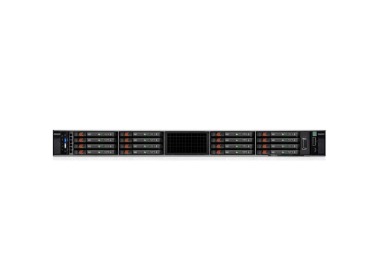
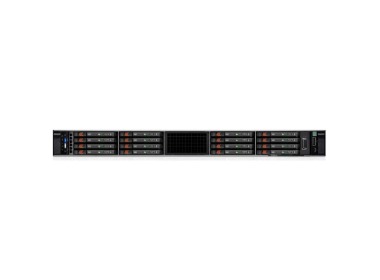
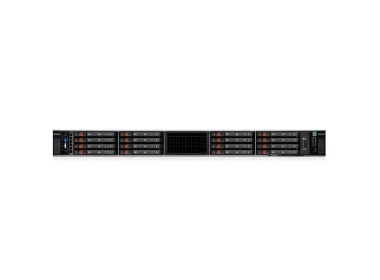
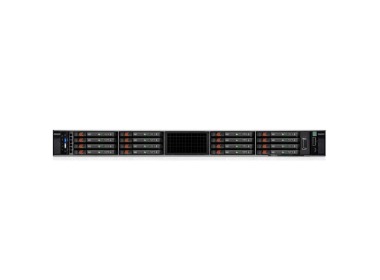
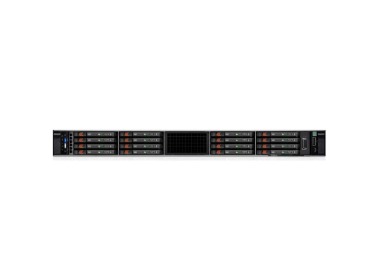
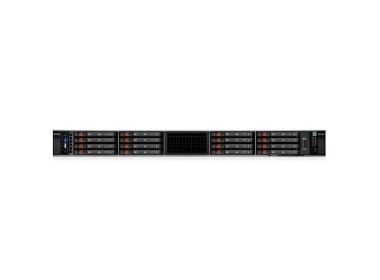
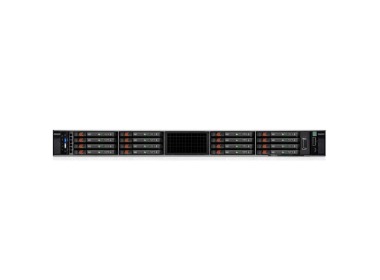
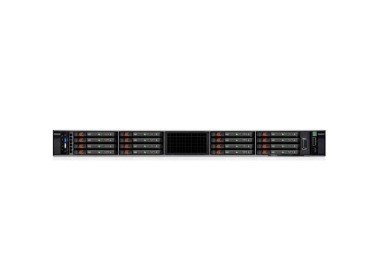
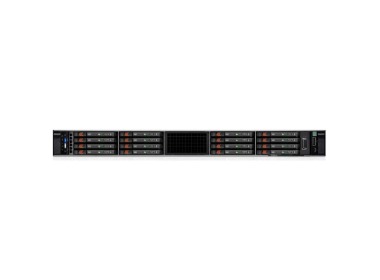
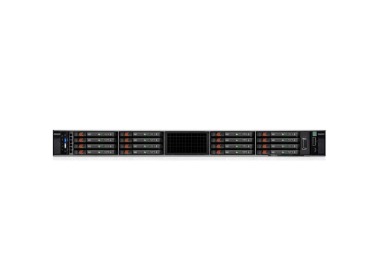
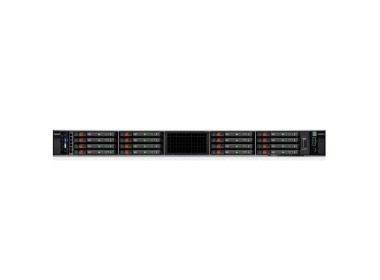
Computing power that fits in 1U – without noise, without over-investment, but with great power under the hood. Dell PowerEdge R6615 is a series of rack servers that relies on the AMD EPYC 9004 platform, known for high single-threaded performance and excellent energy efficiency. If you are looking for a real alternative to Intel, want more cores, larger cache and the ability to scale quickly within one machine – this series does exactly what you expect.
Dell PowerEdge R6615. Single-processor? Yes, but with character
At first glance, Dell PowerEdge R6615 might seem like the "little brother" of dual-processor models – but that's just appearances. Inside you have AMD EPYC 9124 (16C/32T) processor or more powerful EPYC 9354 (32C/64T), plus support for DDR5 memory and PCIe Gen5 interfaces. This is enough to easily handle production environments, virtualization, and even CPU-intensive applications.
Although the design is based on a single CPU, EPYC 9004 makes up for performance per core and very large cache memory. The 9124 version offers 64 MB L3 cache, and the 9354 as much as 256 MB – which in practice means that the server performs well in scenarios such as SQL, NoSQL databases, and Kubernetes clusters.
Dell also focused on performance in a tight chassis. The R6615 model has a 1U rack format, and yet it provides the ability to install up to 10 drives 2.5" (SATA, SAS, NVMe), two redundant power supplies, up to 3 PCIe Gen5 slots and full support for iDRAC 9 Enterprise remote management systems. So you have a compact, but complete server – ready to work under any conditions.
Dell PowerEdge R6615 Server – for whom is this equipment and where does it work best?
Dell PowerEdge R6615 was not created with customers looking for a "file base" in mind. This is equipment for those who have specific infrastructure needs, but don't want to spend more than necessary. The server will work well in companies developing virtual environments (Proxmox, VMware, Hyper-V) – you can run a dozen or so VMs on it without worrying about throttling or IOPS drops.
A version with AMD EPYC 9124, 64 GB RAM and 2x 960 GB SSD will be a solid starting point for ERP system, SQL database, data repository or staging environment. If you add more RAM or switch drives to NVMe – you have a platform for data analysis, backend logic for web applications or CI/CD automation environments.
In companies operating on a hybrid basis or running distributed services, R6615 can operate as a HA cluster node or storage node, while maintaining low power consumption, lower cooling load and significantly lower TCO than enterprise-class machines with two CPUs.
Not just numbers – specific benefits of AMD in R6615
Choosing AMD platform instead of Intel is not just a matter of benchmarks. Dell PowerEdge R6615 uses the potential of EPYC 9004 wisely: you have more cores in one unit, without needing to invest in a second socket. This means fewer licenses (e.g., Windows Server, VMware), fewer cooling issues and lower electricity costs – all while maintaining the same (and often higher) performance.
The server supports a full set of security features: Secure Boot, TPM 2.0, firmware integrity control and Secure Erase, as well as automatic RAM zeroing on restart. For companies operating on customer data, GDPR and ISO27001 compliance is no longer an option, but a requirement. R6615 provides this as standard – without hidden charges.
And what about expansion? You have the ability to expand up to 2 TB DDR5 RAM, combine drives into hardware (H755) or software RAID, add 25/100 GbE cards and full management via iDRAC from anywhere in the world. You get a kit ready for operation – with rails, power supplies and drives. You don't need to assemble anything separately. You put it in the cabinet and launch it.